

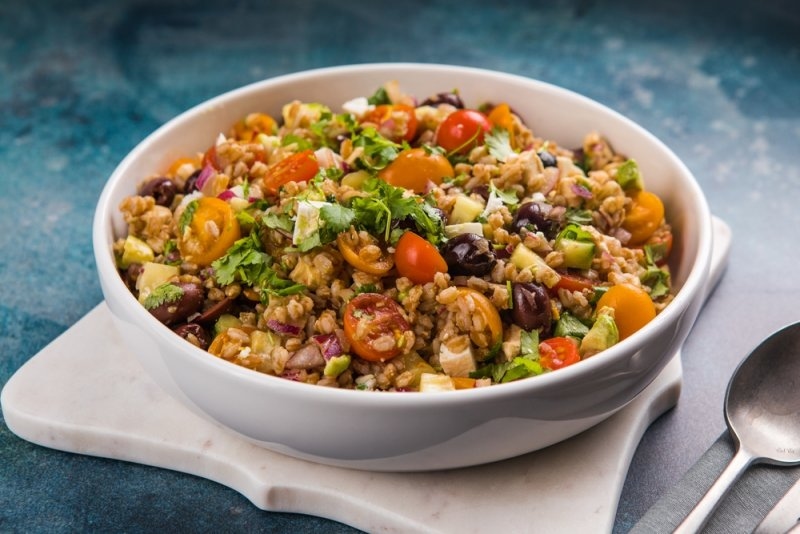
Honestly, most weeknight meals end with that classic question: how can I eat something tasty without ending up with a pile of dirty dishes? This farro recipe nails it. Farro has a nutty flavor and chewy bite, so it stands up to veggies, herbs, cheese, or vinaigrette without getting bland. It also keeps well after cooking, so leftovers are actually something to look forward to.
Here, you toss zucchini, corn, tomatoes, fresh herbs, lemon, and Parmesan together for a meal that feels light and fresh but still cozy. And you don’t have to stick to the script. There are ingredient swaps, variations, pointers, and even comparisons in this blog to help you throw it together on any regular night.
A good farro recipe does not need a long ingredient list. The grain already brings character, so the rest should add contrast rather than compete with it.
The ingredient balance is deliberate. Zucchini recipes brings softness, corn adds sweetness, tomatoes provide acidity, while Parmesan gives the farro recipe a salty finish. Lemon keeps everything from feeling too dense. Fresh herbs wake it up.
For this farro recipe, pearled farro is the easiest choice because it cooks faster than whole-grain farro. Semi-pearled farro is another good option if you want a slightly firmer bite.
Italian farro is especially useful when you want a traditional texture. Italian farro isn’t always the same—some types cook faster than others. Just take a quick look at the package for timing before you start. Farro has this nutty flavor that fits right into soups or grain bowls.
Don't Miss: How to Make the Authentic Carbonara Recipe With Egg Yolk Only?
Cooking it isn’t complicated. Give the grains a rinse first, unless the package says they’re pre-cleaned.
That is it. No complicated sauce.
The same farro recipe can shift easily from a warm dinner into a farro salad. Let the cooked grain cool for about 15 minutes, then add extra tomatoes, cucumber, herbs, and lemon dressing.
A farro salad is especially useful for packed lunches because farro stays firm after refrigeration. A farro salad also tastes better after resting for a little while, giving the dressing time to move through the grains.
For a more Mediterranean-style farro salad, add feta, olives, roasted peppers, and oregano. For another farro salad version, use arugula, apple slices, toasted walnuts, and a sharper mustard dressing.
Corn changes the personality of the dish. A corn salad usually leans fresh and crisp, while cooked corn in this farro recipe gives sweetness without making the meal feel like a side dish.
You can also build a corn salad by mixing cooled farro with corn, cucumber, tomatoes, lime juice, cilantro, and a little chili. That makes a corn salad that feels lighter but still has enough substance for lunch.
This works especially well among healthy summer recipes, where freshness matters but nobody wants another plain green salad. Among healthy summer recipes, grain-based dishes have an advantage because they hold up better after preparation.
Suggested Reading: Best Italian Dessert Recipes You Must Try At Home Today
| Version | Best For | Main Additions | Texture |
|---|---|---|---|
| Warm Farro Bowl | Weeknight dinner | Parmesan, zucchini, corn | Cozy and chewy |
| Farro Salad | Lunch | Cucumber, herbs, feta | Cool and fresh |
| Corn Salad Bowl | Summer meals | Corn, lime, tomato | Crisp and juicy |
| Italian Farro Bowl | Hearty dinner | Roasted vegetables, herbs | Firm and nutty |
The comparison makes one thing clear. This farro recipe is not locked into one format. Italian farro can handle stronger roasted flavors, while a chilled farro salad needs brighter ingredients.
There is a reason this dish fits naturally among healthy summer recipes. It uses whole grains, vegetables, herbs, and a modest amount of cheese rather than relying on a heavy sauce.
Use roasted bell peppers instead of tomatoes, spinach instead of basil, or feta instead of Parmesan. For extra protein, add chickpeas, grilled chicken, white beans, or cooked lentils.
These swaps keep the base of the farro recipe intact while changing the flavor enough that leftovers do not feel repetitive. More importantly, they keep healthy summer recipes practical instead of turning them into complicated projects.
Leftovers are one of the strongest reasons to make this farro recipe. Store it in a sealed container and refrigerate it, then add a splash of lemon juice or olive oil before serving.
For lunch, turn it into a farro salad with greens. For dinner, reheat it with a little broth and add roasted vegetables. Italian farro stays pleasantly chewy, so it does not become mushy as quickly as softer grains.
Also Read: Are Italian Pasta Sauces The Secret To Authentic Flavor?
You want dinner to be simple, not some complicated kitchen experiment. This recipe comes through: chewy farro, sweet corn, tender zucchini, fresh herbs, lemon, and Parmesan, all in one bowl. Serve it warm tonight, cold as a salad tomorrow, or swap in whatever veggies are hanging out in the fridge.
Italian farro gives you that firmer bite when you need it. Plus, swapping ingredients keeps things interesting. This recipe slides right into your summer rotation—those fresh veggies and bright dressing do most of the work.
Totally. Most rice cookers can handle farro—just use the grain setting or stick to the usual water-to-grain ratio. Check your own appliance’s instructions since cook times aren’t always the same. Pearled farro is your best bet if you're using a rice cooker.
Cool it quickly, then stash it in an airtight container in the fridge. You can portion it out ahead of time to make lunches easier. If you’re prepping a farro salad for later, keep the dressing separate.
Yes, it freezes well. Let the cooked farro cool, then pack it into freezer bags or containers. When you’re ready, thaw in the fridge or heat gently with a splash of water or broth.
Don't worry, because farro is a form of wheat and contains gluten. It is best for a person who chooses not to eat gluten to opt for a gluten-free certified product, quinoa, rice, buckwheat, or other types of grains.
You can swap in pearled barley, brown rice, quinoa, or wheat berries, depending on the texture you like. Quinoa makes it lighter; barley is chewy like farro. Just keep in mind that cooking times will change.
This content was created by AI