

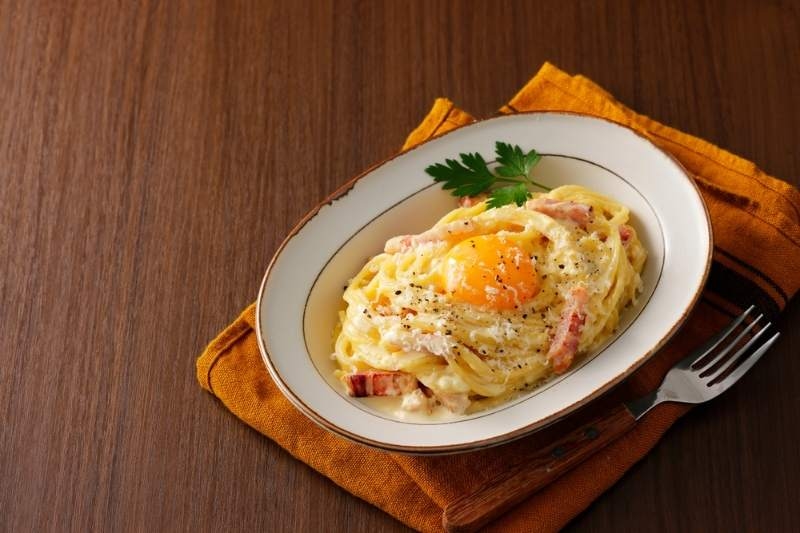
There's something unbelievably satisfying about a truly traditional Carbonara. It's rich but not heavy, creamy but without a drop of cream, comforting but also quite sophisticated. However, despite being one of the most famous pasta dishes in Italy, there are few recipes on the internet that are more commonly misunderstood than this one. Many carbonara recipes add cream, garlic, onions, and even mushrooms, but an authentic carbonara recipe uses the simple combination of egg yolks, Pecorino Romano, and other Italian cooking ingredients.
Here, the technique, rather than additional ingredients, comes into play, creating an incredibly silky-smooth sauce to coat the strands of spaghetti.
In this guide, we will break down the traditional method, discuss why egg yolks are so essential, look at common pitfalls, and give you the perfect creamy carbonara recipe to recreate that classic Roman taste at home.
The reason authentic carbonara is so famous is that it is possible to create an astonishingly creamy sauce without using cream or butter. The creaminess of carbonara is achieved using a specific combination of egg yolks, starchy pasta water, rendered pork fat, and finely grated cheese.
According to culinary historians in Italy, carbonara gained widespread popularity in Rome around the mid-20th century and has now become one of the most iconic Italian pasta recipes in the world. A traditional carbonara contains only the following:
That's it. No cream. No parsley. No pieces of bacon floating in the sauce.
Egg yolks are used instead of whole eggs in authentic carbonara because of their high fat content and emulsifying ability; they contain less water than whole eggs, which results in a far smoother, richer sauce.
Whole eggs can also sometimes result in a watery sauce or a scrambled sauce if not handled correctly, but yolks produce the following:
This is why most Italian chefs prefer the egg yolk pasta recipe to whole-egg pasta.
Servings: 4 people
Cooking time: 25 minutes
Difficulty: Easy-Medium
Rating: 4.9/5 stars on pasta-lover sites!
Place the guanciale in a cold pan and cook over medium heat, slowly rendering the fat and allowing the meat to become crispy and golden.
You want the guanciale to be crispy and golden brown, with a pool of rendered fat left in the pan that you will use to make your carbonara pasta sauce.
If you can't find guanciale, pancetta is the closest alternative; you can use bacon in an emergency, though it creates a different, smokier flavor than traditional carbonara.
Add the egg yolks, sauce, grated Pecorino Romano, and black pepper to a bowl and whisk vigorously until thick and creamy. Some chefs will add a splash of hot pasta water here to slightly loosen the sauce, but it is optional.
The quality of the Pecorino is vital to the salty kick and the richness of an authentic carbonara; Parmesan creates a much milder, softer dish.
Boil the spaghetti in salted water until it's al dente—it should still have a slight bite. It is essential to keep some of the starchy pasta water from the pan before draining the spaghetti, as this is the key to the sauce's creaminess. You will need about 1 cup of pasta water reserved.
This is the most important step, and it's where most people make a mistake. Add the hot pasta straight into the pan with the guanciale and the pork fat and toss it together.
Then, remove the pan from direct heat before adding the egg mixture. This will prevent the egg from scrambling! Slowly stir in the yolk and cheese mixture while adding small amounts of the reserved pasta water until the sauce becomes glossy and creamy.
The finished dish should coat the spaghetti without being watery or gluey.
The best-kept secret in the recipe is that authentic carbonara actually contains no cream. The delicious creamy texture of carbonara is derived entirely from an emulsion made with:
Italian cooks will say that carbonara is all about timing, not just ingredients. The egg mixture needs to be warm enough to thicken but not hot enough to cook solid.
This is the most frequent issue. A scrambled egg doesn't create a smooth sauce! Remove the pan from direct heat before adding the eggs and continuously stir.
Cream fundamentally changes the flavor profile of carbonara, making it much heavier than the classic Italian dish.
Forgetting To Use Pasta Water
This liquid is the key emulsifier in carbonara sauce; without it, the sauce becomes clumpy and gluey.
The beauty of a carbonara recipe lies in its simplicity. Any additions of aromatics, such as garlic and onion, can overpower the key flavors.
Spaghetti carbonara is traditional; however, several other shapes can work:
Longer pasta shapes are better, as they coat the sauce evenly. Tube-shaped pasta traps the bits of guanciale inside.
Carbonara remains popular because it combines simple elegance with restaurant-level flavor. Google Trends shows that search volume for "easy carbonara recipe" and "authentic carbonara" has steadily increased year on year for at least the past five years.
It is incredibly filling but doesn't require any expensive ingredients or time-consuming preparation. Very few other recipes show you can do something incredible with just a few simple ingredients!
An authentic carbonara recipe proves that Italian cuisine is fundamentally all about balance, timing, and simple, excellent ingredients. By using just the right egg yolk-only mixture, quality Pecorino Romano, perfectly cooked spaghetti, and the rendered fat from crisp guanciale, you will be rewarded with a smooth, creamy carbonara without any unnecessary ingredients.
The simplicity of this recipe is truly astounding: take a handful of ingredients, blend them to perfection with the right combination of technique and heat, and you get something rich and satisfying. Making homemade carbonara may seem complicated, but once you know how, the simple Roman recipe can be incredibly approachable and rewarding.
The flavor of a carbonara dish will change if guanciale is not used, though it can be done. Pancetta is the best substitute as it has a similar curing profile to guanciale, but bacon will also work if nothing else is available. The bacon flavor has a much smokier profile, which significantly alters the final taste of the carbonara.
The reason that carbonara sauce turns scrambled is a temperature issue! The mixture will scramble when heated above about 70 degrees Celsius. The heat source needs to be removed before adding the eggs so they don't overcook and turn into tiny bits of scrambled egg, leaving a rich sauce that coats the pasta.
A traditional carbonara uses Pecorino Romano, as it adds a stronger, saltier flavor that complements the richness and fat content of the sauce from the other ingredients. Parmesan provides a milder taste and a smoother texture, but if you want the most authentic Carbonara recipe in the world, you should definitely use Pecorino Romano!
This content was created by AI